

The name of the country comes from the word “Engaland”, which means “Land of Angles”. The Angles were on the Germanic tribes that settled in Great Britain during the Early Middle Ages. According to the Oxford University Dictionary, the Word England was first used in 1538.
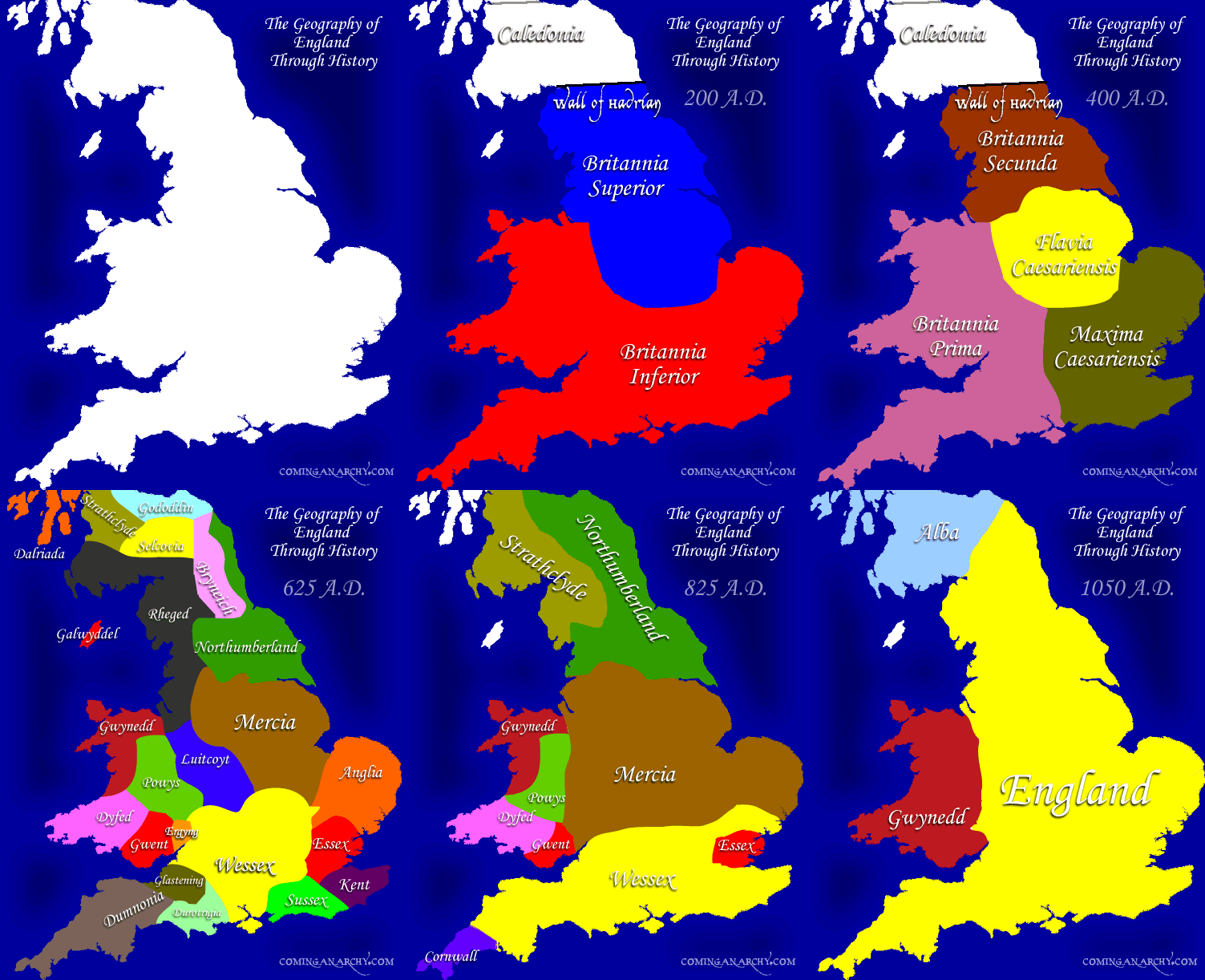
It is necessary to go back in time and mention the Celtic culture tribes, who were the first in stablish civilizations on the island in the Iron Age (around 2000 B.C.). In 55 B.C. Julius Casar tried to conquer the island but it was unsuccessful, and later in 43 A.D., Emperor Claudius conquered Britain. Centuries later the island was divided in territories and it brought the creation of the kingdoms between the 5th and 6th centuries (North Umbria, Mercia, Wessex, East Anglia, Essex, Kent, and Sussex). This mixture of cultures, religions and traditions formed some Celtic Christian monastics and roman churches, as well as several languages such as Celtic-British, Latin-British, and so on. The Norman conquest of England in the 10th century also brought some charges in the ways of monarchy and cultural development of the region.

But King Henry VIII (who had got married six times) broke all communion with the Vatican and the Catholic Church since the divorce was not conceded and created his own church with himself as the head of it, in 1534 the Anglican Church was created, this was more political biased than theological.
People were tired of the monarchies on the island and tried to institute a parliament to govern the kingdoms, it turned out into the English Civil war between the parliamentarians (roundheads) and the royalists (cavaliers) in 1642. With the death of King Charles I, in 1649, England became a Republic, known as the commonwealth. In 1653, the Parliament had been established, Oliver Cromwell became Lord Protector (who was the head of the state in the British constitutional law) and began what is usually referred to as the Protectorate. Monarchists call this period in history the Interregnum.

The Great fire of London (2nd-6th September, 1666) was the result of the tension between the parliamentarians and the royalists. Then, in 1707 the United Kingdom of Great Britain and Northern Ireland was conformed; it brought several changes in the politics of the island and historical events (mainly the Industrial Revolution in the late 19th century).
Find more information about the history of the country in the following video
 ENGLAND